
High School: Lesson Plan 4
Home » Teacher Portal » High School » High School: Lesson Plan 4
High School Lesson 4: Mental Health and Substance Use: Understanding the Connection and Building Resilience
Students will learn about the five dimensions of health and wellness and how mental health connects to substance use. They will develop an understanding of substance use disorders and mental health challenges, and explore self-care strategies and support systems that can promote well-being.
This lesson is aligned with the following learning outcomes from the NL High School Health Curriculum:
Drug Education
- Describe how substances can affect the five components of health and well-being (mental, physical, emotional, spiritual, and social health).
- Analyze the connections between mental health and substance use, including how one can influence or impact the other.
- Identify and apply personal self-care strategies that promote resilience, well-being, and harm reduction.
- Evaluate the role of support systems (family, friends, community) in maintaining mental health and reducing risks related to substance use.
- Demonstrate decision-making and goal-setting skills that support mental health, well-being, and safer choices.
Emotional and Social Well-being
- Demonstrate knowledge, skills, and behaviours related to health-related decision making.
Technology and Communications
- Utilize information technology to access, present, and communicate information on substance use.
Environmental Health and Safety
- Demonstrate skills and behaviours which enhance personal safety, the safety of others, and the protection of the environment.
Learning Activities
- Learning Activity 1: The Mental Health and Substance Use Connection
- Infographics: Stigma, Health and Wellness
Students and teachers may find it helpful to refer to the following infographics as they work through this learning activity.
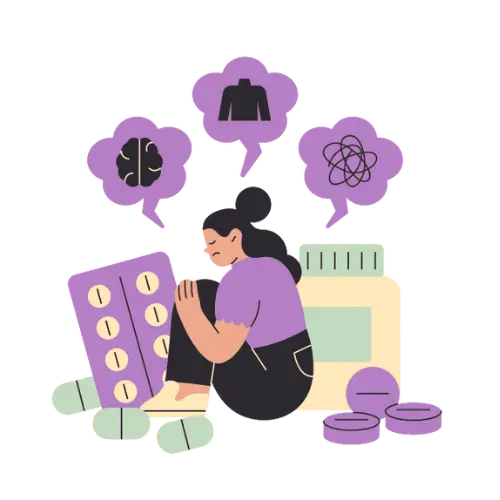
- Exploration Activity: Cannabis and Mental Health
In this two-part case study, students explore the connection between cannabis use and mental health. In Part 1, they listen to a podcast highlighting a real experience with cannabis-induced psychosis, and in Part 2, they watch a video examining how cannabis can affect mental illness.

- Sharing and Reflection: Cannabis Labelling
Students reflect on whether cannabis labels should warn about cannabis-induced psychosis.

- Learning Activity 2: Self-Medicating
- Infographics: Stigma, Stress, Protective and Risk Factors for Substance Use
Students and teachers may find it helpful to refer to the following infographics as they work through this learning activity.
- Introduction: Self-Medicating and Mental Health
Students engage in the following True or False activity to reinforce key concepts around self-medicating and how it relates to mental health and substance use.

- Exploration Activity: Lived Experience Spotlights - Aria’s Experience: Using Substances to Cope
Students explore a real-life story to understand how mental health and self-medicating can influence substance use and decision-making.
- Sharing and Reflection: Peer Message
Students create a peer message that raises awareness about the connection between mental health and substance use and promotes safer, informed choices.
- Learning Activity 3: Self-Care and Support Systems
- Infographics: Stress, Understanding Emotions, and Self-Care
Students and teachers may find it helpful to refer to the following infographics as they work through this learning activity.

- Introduction: Stressed or Stretched? Understanding Stress, Self-Care, and Emotional Regulation
Students will learn to identify the difference between positive (eustress) and negative (distress) forms of stress, and recognize how stress affects the body, mind, and emotions.

- Pre-Activity
Songs of Support – Exploring Mental Health Through Music
Students explore how music reflects real-life experiences with mental health, coping, and support by analyzing song lyrics for themes of emotion, struggle, and resilience.

- Songs of Support: Teacher Discussion Guide
Provides teacher guidance for this activity.
- Exploration Activity Part 1: FACE Scenario - Blake’s Experience: Feeling Overwhelmed
Students use the FACE model to explore a real-life scenario about stress and identify healthy self-care and support strategies. Students may find it helpful to refer to the following infographics as they work through the FACE scenario.

- Exploration Activity Part 2: Blake’s Next Steps - Getting Support and Building Balance
Students explore how self-care and social prescribing can work alongside medical treatment to support overall health and well-being, applying these concepts to a scenario.

- Sharing and Reflection: My Mental Health & Wellness Toolkit
Students build a personal Mental Health & Wellness Toolkit by completing a wellness check-in across five dimensions of health, identifying their circle of supports, listing coping and self-care strategies, and setting personal mental health goals.
These resources may help support the delivery of the lesson plan and learning activities:

Educational Materials
The relevant Educational Materials for this lesson are referenced throughout the lesson plan; additional ones are available here.

Substance Snapshots
Relevant Substance Snapshots are noted in the lesson plan; more may be accessed here.